Cleaner Company Cleaning Equipment Guide
How Star Wipers turn gore, debris, and hostile leftovers into a contract payout.
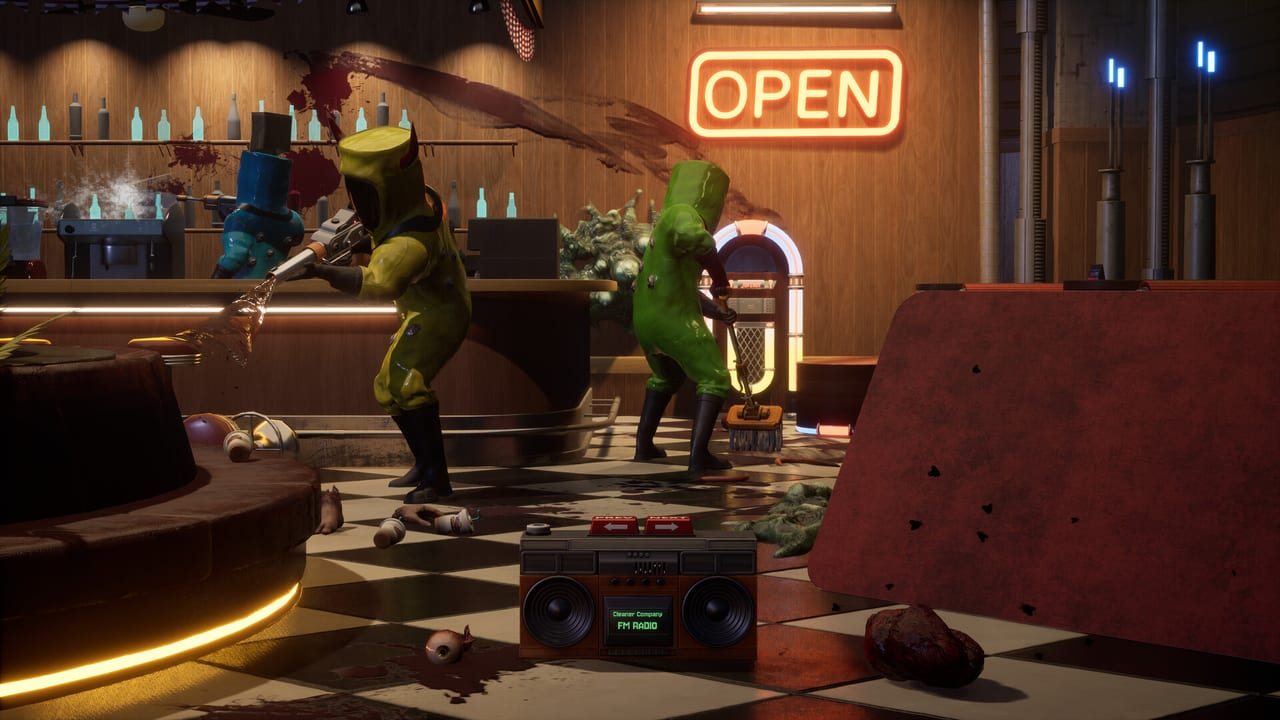
Cleaning equipment is the heart of Cleaner Company. Wildflame Studio and Mythwright cast you as a Star Wiper—company-mandated hazmat suit, retrotech tools, and a mandate to restore abandoned space stations, alien outposts, orbital restaurants, and research labs that went catastrophically wrong. This page explains the published tool fantasy, how each class of gear fits the cleanup loop, how earnings fund upgrades, and how to assign roles in 1–4 player online co-op without inventing stats that Steam has not published.
The free Flying Canteen demo and earlier playtests (Experimental Laboratory, Polar Facility) are the best live classrooms. Pair this article with Controls, the Equipment Tier List, and Getting Started before you burn an evening on the wrong upgrade path.
The Star Wipers toolkit (published kit)
Official store and trailer copy repeatedly call out:
- Mops — the icon of the fantasy. Liquids, blood, and smearable stains are mop territory. The line “the mop is mightier than the flamethrower, but it’s better to take both” is not a joke—it is loadout advice.
- Cosmic vacuums — dry debris, loose bits, and materials that should be pulled rather than smeared. Vacuums shine when floors look dry but still fail inspection.
- Trash grinders — solid waste, chunks, appendages, and the awkward leftovers of a bad day in orbit. Grinders keep corridors walkable when physics piles up.
- Powerwashers — high-pressure blast for stubborn stains, spores, and surfaces that laugh at a polite mop pass.
- Weapons — when Parasites, Slimes, Screamers, or other threats are enabled, cleaning alone is not a survival plan.
- Hazmat suit — company-issue protection that still fails against environmental slapstick, gravity weirdness, and the occasional meteor. Treat it as baseline, not invulnerability.
Exact damage numbers, magazine sizes, and unlock trees can change between playtest, demo, and the 2026 launch. Use this page for roles and priorities; re-check Release News after patches.
How the cleaning loop actually feels
Contracts ask you to restore a site to company standards: remove gore, stains, spores, appendages, and co-worker chunks; manage physics so you do not create a second disaster; extract with earnings you can spend on better gear. Dynamic physics means liquids splash, props tip, and “almost clean” rooms can fail if someone sprints through a wet patch. Slow, deliberate passes beat chaotic spray-and-pray—unless your co-op table is chaotic spray-and-pray and you are monetizing the mayhem.
Think in layers:
- Secure — if monsters are on, clear or suppress threats before you commit both hands to a mop.
- Bulk remove — grinders and vacuums clear volume so you can see true stains.
- Surface finish — mop and powerwasher pass until the room reads “done.”
- Police the physics — pick up knock-ons, re-wipe splashback, check corners and ceilings the camera likes to hide.
Solo players should keep a flexible kit. Co-op crews should specialize: one “bucket” player on liquids, one vacuum/grinder on solids, one floater with weapons and powerwasher for emergencies. Role sticky notes in Discord beat mid-mission arguments—invite links live on the Links Hub.
Upgrades and earnings
Mythwright’s pitch is clear: complete challenges and contracts, climb the ranks of the orbital maintenance company, and spend earnings to upgrade equipment, health, damage, and speed. Early money is better spent on tools that shorten every room (vacuum throughput, mop efficiency, washer pressure) than on vanity. When threats are enabled, a modest weapon upgrade that keeps you alive is worth more than a shiny floor tool you never get to use.
Suggested early priorities for demo and playtest crews:
- Reliability on your primary clean tool (mop or vacuum depending on the site’s mess mix).
- One “stubborn stain” answer (powerwasher).
- One “solid waste” answer (grinder).
- Enough combat readiness to survive a Screamer push if monsters are toggled on.
For ranked opinions after you understand the kit, open the Equipment Tier List. For site-specific mess mixes, see Demo & Playtest and location notes under Guides.
Co-op loadout examples
Calm four-stack: mop specialist, vacuum specialist, grinder runner, weapon overwatch who also carries the powerwasher. Callouts for “wet lane” and “threat door” keep physics under control.
Duo: one player owns liquids + washer; the other owns vacuum + grinder + primary weapon. Swap only when a room type clearly favors the other kit.
Solo: rotate tools room-by-room. Clear threats first, then bulk solids, then liquids, then final wipe. Disable monsters in difficulty if you want a pure meditation clean.
Chaos night: everyone brings weapons and one cleaning tool; expect splashback, gambling jokes, and a longer clock. Still profitable if the crew finishes—just budget time.
Threats versus tools
Parasites, Slimes, and Screamers exist to interrupt flow state. Official copy frames them as optional via difficulty. When enabled:
- Do not tunnel-vision on a stain while audio telegraphs a push.
- Assign one player to watch entries while others clean.
- Remember defeated threats can leave more mess—budget a post-fight cleanup pass.
When disabled, treat the mission as a physics puzzle and inspection checklist. Either mode is valid; just agree before you launch.
Related wiki routes
- Tools Hub — parent index for gear, controls, and PC specs.
- Controls — how to actually swing the mop and swap tools under pressure.
- System Requirements — Steam minimum GTX 1660 class and recommended RTX 3060 class specs.
- Equipment Tier List — priority rankings for upgrades.
- Survive Threats and Co-op Guide — combat and crew habits.
- Wiki Overview — full site map.
Master the equipment fantasy first, then let patches refine the numbers. Star Wipers who respect both the mop and the sidearm clock out alive—and paid.
Frequently Asked Questions
Quick answers for Star Wipers before the next contract.
What cleaning tools are confirmed for Cleaner Company?
Official materials highlight mops, cosmic vacuums, trash grinders, powerwashers, and weapons, plus a company hazmat suit. Exact unlock lists may expand toward the 2026 release.
Can I play without fighting monsters?
Yes. Difficulty settings can untoggle monsters so you focus on cleaning and physics. Weapons still matter if your lobby keeps threats enabled.
How do upgrades work?
Complete contracts and challenges to earn resources, then upgrade equipment, health, damage, and speed. Prioritize tools you use every room before niche upgrades.
Should co-op crews specialize?
Usually yes—assign mop, vacuum/grinder, and overwatch roles so physics and threats stay manageable. See the Co-op Guide for crew habits.